Short answer. Salzburg was ruled for centuries by archbishops who were also princes, and they gave the city its Baroque face. Mozart was born into their court in 1756, worked for them and left them in 1781. Walk the streets with this story in mind and the palaces, the cathedral and the music make more sense. Hear Mozart in the Mirabell Palace and see the rooms of the archbishops’ residence: the cards below show the dates.
Concerts, city card, tours and day trips
Salzburg: Mozart Classical Concert at Mirabell Palace
4.7· 192 reviews
from €42
Book tickets and tours →How did Salzburg begin?
Salzburg began as a Roman town, Iuvavum, which became one of the main cities of the province of Noricum. Around the year 696 Bishop Rupert received land and the remains of the old town from the Duke of Bavaria and built a church where St. Peter’s Abbey stands today. The abbey still stands, and it is one of the oldest in the German-speaking world. Salzburg became a bishopric in 739 and an archbishopric in 798.
The name tells you where the money came from: it comes from the barges that carried salt along the Salzach. Salt, and for a time gold, made the archbishops rich. In 1213 the archbishop became a prince of the Holy Roman Empire, and from then on the church ruled the city as a state.
Who built the Baroque city?
Three archbishops stand out, and each left a place you can visit.
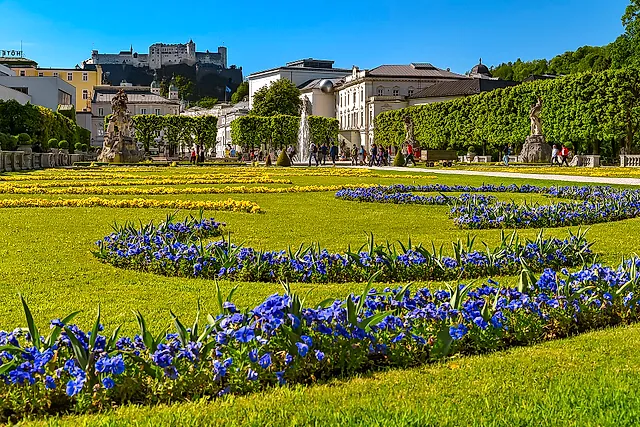
Wolf Dietrich von Raitenau (1587-1612) rebuilt the city in an Italian Baroque taste. After a fire in 1598 he had the old cathedral pulled down, and he cleared 55 medieval buildings to open the Residenzplatz. He also built the palace now called Mirabell in 1606 for his partner Salome Alt and their children. His successor sent them away and gave the palace its new name.
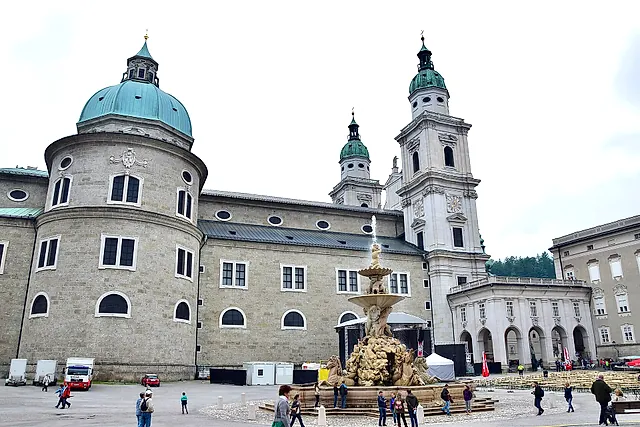
Markus Sittikus (1612-1619) finished the cathedral, and he built Hellbrunn, a summer palace with trick fountains. Santino Solari, the Italian architect behind both, shaped much of the look of the old centre.
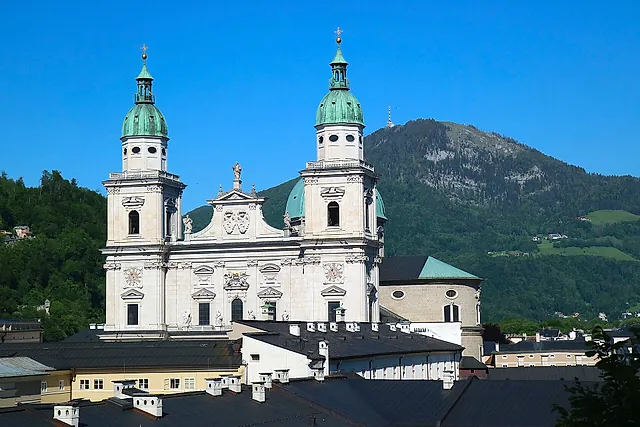
Paris Lodron (1619-1653) kept Salzburg at peace while the Thirty Years’ War raged across Europe. The cathedral was consecrated under him in 1628. Italian and Austrian architects had rebuilt the centre in those years, and today it is a UNESCO World Heritage site, described by UNESCO as a meeting point of north and south. The city has been called the Rome of the North.
The fortress above the city, Hohensalzburg, is older than all of them. It was begun in 1077, took its present shape around 1500 and was never taken by foreign troops.
Power could be harsh too. Wolf Dietrich told Protestants to convert or leave, and in 1731 more than 20,000 of those who remained were expelled.
What was Mozart’s Salzburg?
Wolfgang Amadeus Mozart was born on 27 January 1756 at Getreidegasse 9 and baptised the next day in the cathedral. His father Leopold was a violinist and deputy music director at the archbishop’s court. Wolfgang grew up in a house of music, and from 1762 he and his sister Nannerl toured Europe as child prodigies: Munich, Vienna, Paris, London and, between 1769 and 1771, Italy.
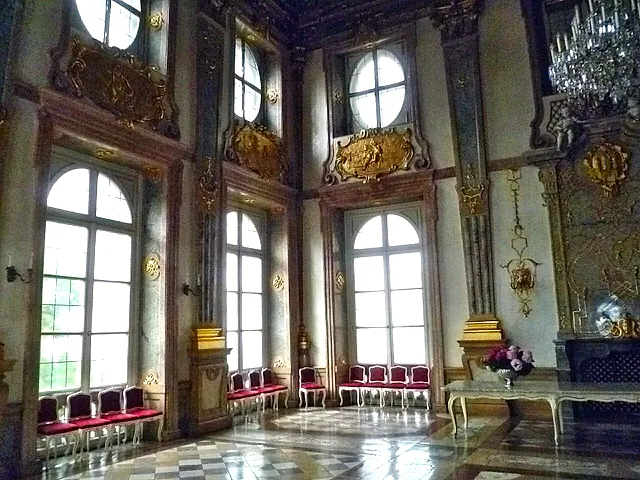
Leopold and his children performed in the Marble Hall at Mirabell, and in 1769 the 13-year-old Mozart wrote a mass for the abbot of St. Peter’s. The family later lived in the Tanzmeisterhaus.
The last of the prince-archbishops with real power, Hieronymus von Colloredo, was a patron of Mozart and an unpopular reformer. In 1781 they quarrelled, Mozart was dismissed and he settled in Vienna for good. He came home once more in 1783 with his wife Constanze, who sang a solo part in the Mass in C minor he wrote at that time. It was planned for the abbey church of St. Peter.
What happened to the archbishops?
Napoleon ended their rule in 1803. Salzburg passed to the Austrian Empire in 1805, to Bavaria in 1809 and in 1816 it returned to Austria for good. Berchtesgaden stayed on the Bavarian side of the border, which is why the salt mine there is in Germany today.
A century later, in 1920, the first Salzburg Festival opened with Jedermann on the cathedral steps. Mozart’s city had become a city of music again. The historic centre joined the UNESCO list in 1996.
Where can you follow this story?
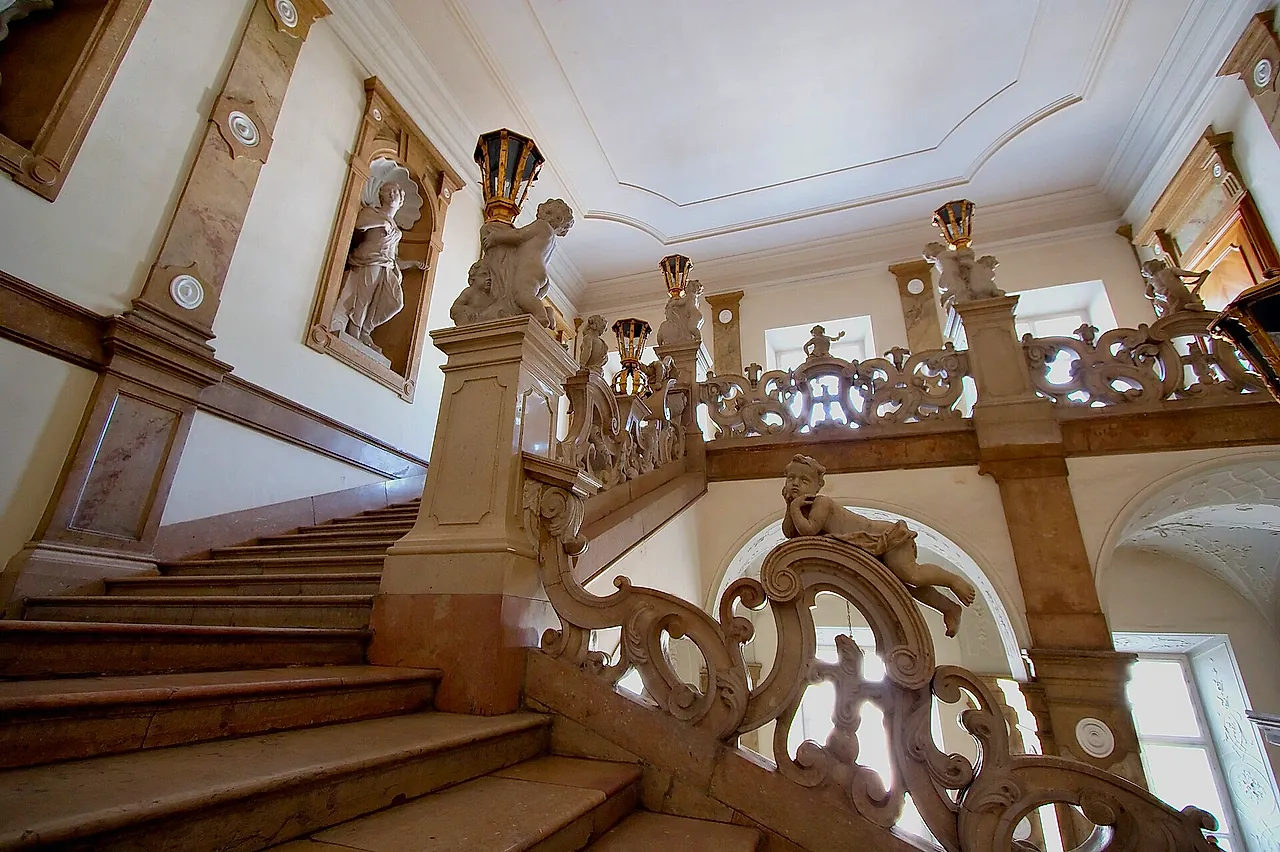
Start at the Mirabell Palace and its gardens, free to enter and open every day from about 6 in the morning until dusk. Walk to Getreidegasse, where Mozart’s birthplace is open every day from 9:00 to 17:30. Cross the Residenzplatz to the cathedral, and stop at St. Peter’s, with its abbey church and cemetery. The DomQuartier lets you walk through the grand rooms of the archbishops’ Residenz, from there to the cathedral museum and St. Peter’s museum. For a plan that links these places in order, see what to see in Salzburg in one or two days.
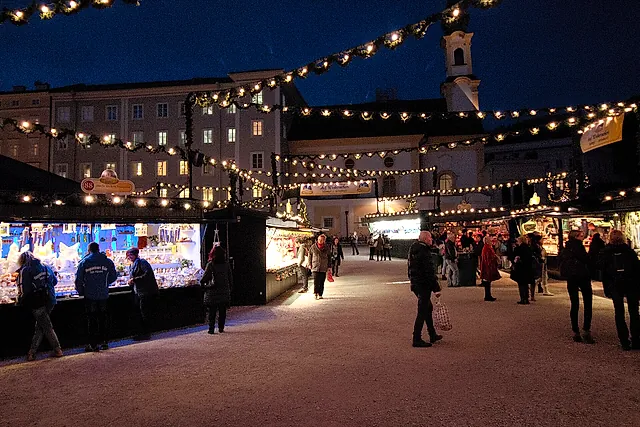
In the evening, hear the music: our Mozart concerts guide shows which concert fits your dates, Christmas and New Year included. And for the film that made the city famous across the world, see the Sound of Music film locations tour.
Short on time? Take a concert. Want to see where the archbishops lived? Choose the DomQuartier.